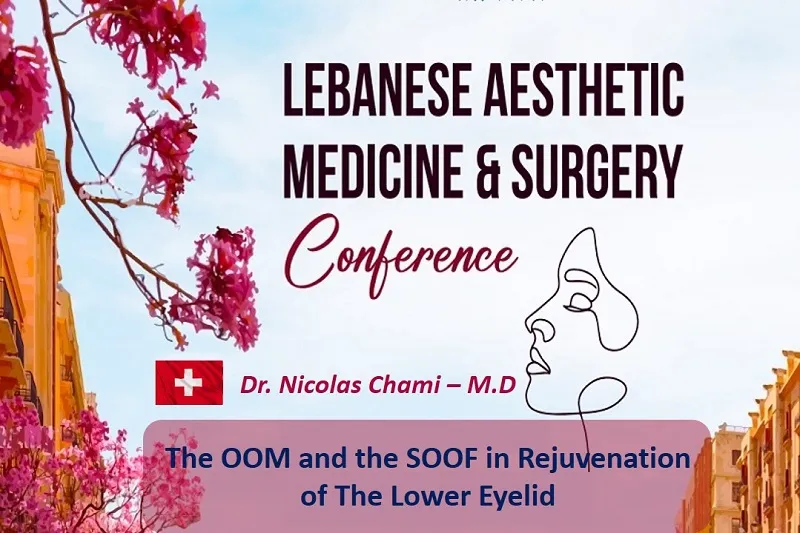
Objective: How to improve the lower eyelid when aging is associated with laxity of the OOM and descent of the SOOF. Methods: Orbiculopexy and fat repositioning will correct the tear trough. Skin laxity had also to be addressed. However, the vectors of traction are different for the muscle-fat compared to the skin. Results: Some cases are shown, including patients with festoons as well as tips…
Objective: How to improve the lower eyelid when aging is associated with laxity of the OOM and descent of the SOOF. Methods: Orbiculopexy and fat repositioning will correct the tear trough. Skin laxity had also to be addressed. However, the vectors of traction are different for the muscle-fat compared to the skin. Results: Some cases are shown, including patients with festoons as well as tips…
Objective: How to improve the lower eyelid when aging is associated with laxity of the OOM and descent of the SOOF. Methods: Orbiculopexy and fat repositioning will correct the tear trough. Skin laxity had also to be addressed. However, the vectors of traction are different for the muscle-fat compared to the skin. Results: Some cases are shown, including patients with festoons as well as tips…
Objective: How to improve the lower eyelid when aging is associated with laxity of the OOM and descent of the SOOF. Methods: Orbiculopexy and fat repositioning will correct the tear trough. Skin laxity had also to be addressed. However, the vectors of traction are different for the muscle-fat compared to the skin. Results: Some cases are shown, including patients with festoons as well as tips…


 Country: Switzerland